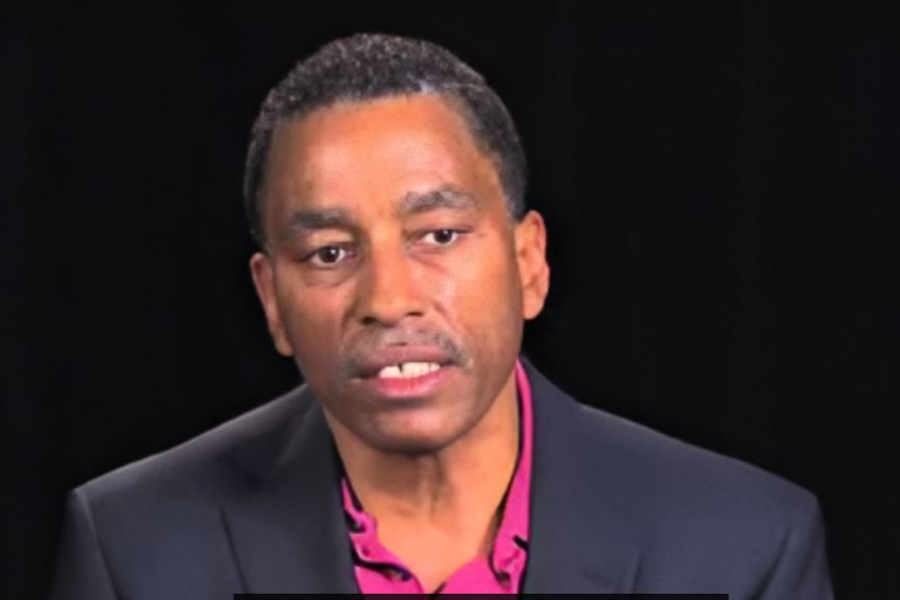
Basic Information
Roderick Jeffrey Watts is a scholar whose public identity is shaped by academia, community psychology, and private reserve. He is publicly associated with the Graduate Center at the City University of New York, where his faculty-level presence has been noted in institutional materials. His work is linked to liberation psychology, youth sociopolitical development, men’s development, program evaluation, and qualitative methods. Those themes suggest a career built around inquiry, equity, and applied social understanding.
The name Roderick Jeffrey Watts also appears in shorter forms, including Roderick J. Watts and R. J. Watts. Public biographical references connect him to Isabel Wilkerson through marriage reported in 1989. Later, Wilkerson remarried in 2009, which marks another fixed date in the wider public record. Beyond those anchor points, the available profile remains restrained and academically oriented.
Public Identity and Professional Shape
Watts does not present as a celebrity figure with a flamboyant media trace. His public footprint is lean, composed mainly of academic profiles, research listings, and institutional mentions. That scarcity is itself revealing. It implies a preference for scholarship over spectacle and practice over self-promotion.
His occupation is generally described as academic or psychologist, though that label barely contains the breadth of his likely work. Public references place him in the orbit of community-based inquiry. That includes research concerned with empowerment, identity, and development in social context. Such a portfolio typically demands patient observation, interpretive discipline, and a tolerance for complexity.
The public record also indicates a collaborative temperament. Scholars in these fields often move between teaching, writing, consultation, and program design. Watts appears to fit that pattern. His footprint suggests sustained involvement in work that links theory to lived experience.
Relationship History and Family Context
One of the clearest public details is his marriage to Isabel Wilkerson in 1989. That single event situates Watts near a prominent literary and journalistic life, though his own public identity remains distinct. The relationship is recorded as part of biographical history, not as a centerpiece of his persona. That distinction matters because it keeps the focus on documented fact rather than speculative intimacy.
The family context around Wilkerson includes her parents, Alexander Wilkerson and Rubye Wilkerson. They belong to Isabel’s biography rather than Watts’s personal record, yet they appear in the broader family narrative. Their inclusion shows how public biographies often create overlapping constellations around one notable person. Watts becomes visible through that connection, while still maintaining a mostly private individual profile.
There is no reliable public documentation of children or a sprawling household tied specifically to Watts. That absence should not be mistaken for dramatic secrecy. It more likely reflects an ordinary preference for discretion. In public life, not every significant relationship becomes a published artifact.
Academic Work and Research Emphases
Watts’s scholarship is associated with several intellectually demanding domains. Liberation psychology is one of the most distinctive. It generally examines how people and communities resist oppression and build agency. That framework is both analytical and moral, requiring attention to power as well as personhood.
Youth sociopolitical development is another major theme. This field studies how young people come to understand social structures, civic participation, and collective responsibility. It often intersects with education, identity formation, and community action. A scholar working there typically engages questions that are simultaneously developmental and political.
Men’s development adds another layer. This area can involve masculinity, emotional socialization, relational health, and cultural expectation. It is a field that benefits from nuance, because it resists crude binaries. Program evaluation and qualitative methods round out the profile by supplying methodological rigor. Those approaches allow researchers to assess interventions and listen closely to human accounts.
Career Timeline
The public timeline is not exhaustive, but several points recur with consistency. The following table organizes the visible milestones in a compact form.
| Period | Publicly referenced detail |
|---|---|
| 1989 | Marriage to Isabel Wilkerson |
| 1990s | Academic activity and community based scholarship |
| 2000s | Ongoing research, publication, and institutional affiliation |
| 2009 | Isabel Wilkerson remarried |
| 2010s to present | Continued faculty level association and research visibility |
This chronology is sparse, yet it still conveys continuity. Watts seems to have maintained an enduring professional life rather than a media driven one. The public record points toward steady scholarly labor across multiple decades. That kind of persistence is often more durable than visibility.
Public Visibility and Digital Footprint
Roderick Jeffrey Watts has a modest online presence. His visibility emerges through academic pages, research directories, and references in institutional contexts. That creates a different public texture from the one associated with authors, entertainers, or public commentators. The available material is factual, functional, and relatively unsensational.
This restrained footprint can produce ambiguity for outside readers. Search results may mix him with other people who share the name Roderick Watts. That makes careful identification necessary. It also reinforces a broader truth about scholarly lives: significance does not always arrive with loud digital amplification.
The internet often rewards quantity over precision. In Watts’s case, the record resists that tendency. It is narrower, but also cleaner. The result is a profile built from verifiable professional signals rather than elaborated personal mythology.
Net Worth and Financial Speculation
There is no credible public estimate of Roderick Jeffrey Watts’s net worth. That absence is unsurprising for a private academic. Wealth estimates usually require public disclosures, celebrity reporting, or corporate documentation. None of those conditions appear to apply here.
It is better to treat that silence as a boundary, not a gap to be filled with conjecture. The public record is stronger on professional standing than on finances. A net worth figure would be speculative without reliable evidence. In a careful biography, that is enough reason to omit it.
Style of Work and Intellectual Temperament
Watts’s public profile suggests a person oriented toward serious, participatory, and methodical work. Liberation psychology and youth development are not superficial fields. They ask difficult questions about justice, meaning, and agency. They also tend to attract scholars who are comfortable inhabiting layered social realities.
The tone of his record is studious rather than performative. That gives his biography a certain austerity, but not a cold one. It reads as a life invested in durable questions. Those questions concern how people change, how communities organize, and how scholarship can become practically useful.
He seems to occupy a disciplined middle ground between classroom theory and social engagement. That position requires more than abstract expertise. It calls for interpretive patience, ethical seriousness, and an appetite for collaboration. His public trail reflects those qualities without announcing them theatrically.
Key Takeaways
Roderick Jeffrey Watts is publicly known as an academic and psychologist with a faculty level association at CUNY. His work is linked to liberation psychology, youth sociopolitical development, men’s development, program evaluation, and qualitative methods. His marriage to Isabel Wilkerson was publicly reported in 1989, and Wilkerson’s later remarriage in 2009 marks another fixed point in the shared public chronology.
His public profile remains intentionally modest. The available record emphasizes scholarship, institutional affiliation, and research themes rather than private detail. There is no reliable public net worth estimate, and there is little substantive tabloid material attached to his name. That combination produces a biography defined by intellectual labor, quiet visibility, and disciplined privacy.