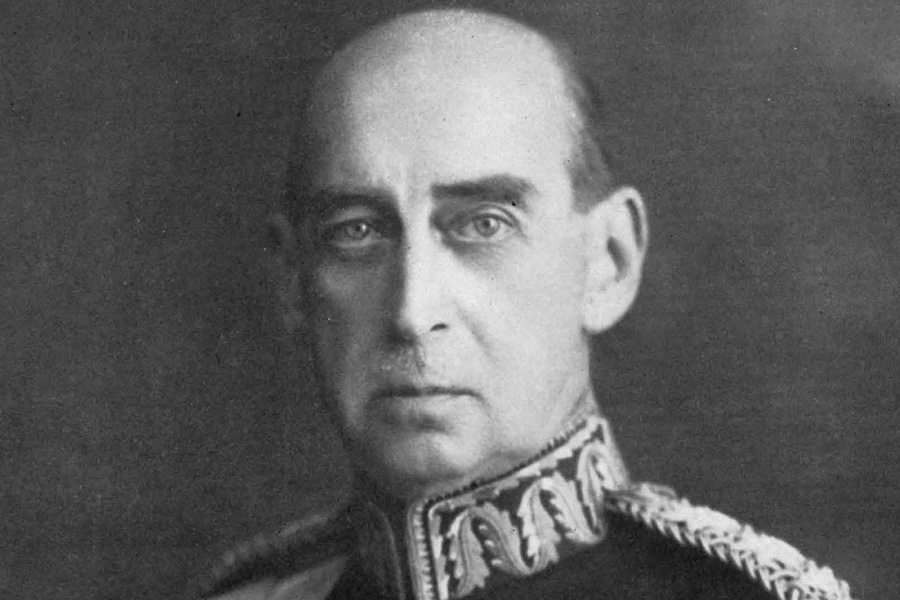
Early Life and Dynastic Setting
Prince Nicholas Of Greece And Denmark was born on January 22, 1872, inside the Athens Royal Palace. He entered a house of immense dynastic breadth and ceremonial discipline. He was the fourth child and third son of King George I of Greece and Queen Olga Constantinovna of Russia. His birth linked Danish, Russian, and Greek lines in one formidable imperial lattice.
That lineage shaped his education and his public bearing. He grew up amid court formality, Orthodox devotion, and a constant awareness of duty. He also lived in an age when monarchy itself began to look increasingly vulnerable. Old institutions still glimmered, yet modern politics pressed against them with growing severity.
Nicholas never became a loud emblem of power. His temperament inclined toward service, art, and cultivated restraint. He moved through royalty with a quieter gravity than many of his contemporaries. That reserve later became one of his defining distinctions.
Military Duty and Olympic Leadership
Nicholas entered the Hellenic Military Academy at age 13 in 1885. By 1890, he had earned commission as a second lieutenant in the Greek infantry. His military path was neither ornamental nor casual. It was an expectation, accepted with measured seriousness.
He later commanded an artillery battery during the 1897 Greco Turkish War. He also served again in the First Balkan War of 1912. These assignments placed him in active conflict across two different eras of regional upheaval. The long interval between them reveals how enduring his martial obligations were.
His most celebrated public role arrived in 1896. He and his brothers Constantine and George helped organize the first modern Olympic Games in Athens. Nicholas served as president of the Shooting Sub Committee. The event gathered 241 athletes from 14 nations, an extraordinary scale for the period.
That Olympic undertaking mattered far beyond athletics. It projected Greece onto an international stage with confidence and precision. Nicholas helped transform a ceremonial dream into a functioning modern institution. His place in that achievement is often overshadowed, yet it remains central to his public legacy.
He also acted as a familial envoy in 1896. He represented his father at Princess Maud of Wales’s wedding in London. Such assignments reflected trust, tact, and social composure. Nicholas could move between military, diplomatic, and ceremonial spheres with uncommon ease.
Painter Playwright and Cultural Steward
Nicholas’s artistic life gave him a second identity. He painted under the pseudonym Nicolas Leprince. That choice gave him freedom from the burden of his title. It also allowed his work to stand apart from dynastic prestige.
His creativity extended beyond painting. He wrote, directed, and produced plays under a pseudonym as well. In 1913, after the assassination of King George I, he inherited the Greek Royal Theater. For 22 years, he acted as its custodian and cultural guardian.
The theater was more than property. It was an instrument of prestige, memory, and national expression. Nicholas eventually transferred it to the Greek state in 1935. That decision marked a quiet act of stewardship rather than self-display. He understood that cultural institutions outlast private possession.
His paintings became especially important during exile. He taught art and sold canvases to support his family. This was not dilettantism. It was disciplined adaptation under financial strain. His art served as both refuge and revenue.
Nicholas also published two memoirs in 1926 and 1928. Those works offered reflective glimpses into a life shaped by service and rupture. They preserved his voice during years when political instability threatened many royal narratives. In that sense, he was archivist as much as artist.
Family Origins and Sibling Bonds
Nicholas came from a densely interwoven family structure. His father, George I of Greece, was born Prince William of Denmark in 1845. His mother, Queen Olga Constantinovna of Russia, was born in 1851 and descended from Tsar Nicholas I. The household fused northern, eastern, and Balkan traditions.
He had seven siblings, each significant in different ways. Constantine I, born in 1868, endured multiple reigns and the turbulence of World War I. George, born in 1869, married Princess Marie Bonaparte and later helped Nicholas financially during exile. Alexandra, born in 1870, married Grand Duke Paul Alexandrovich of Russia and died in 1891.
Princess Maria, born in 1876, married Grand Duke George Mikhailovich of Russia and later Admiral Perikles Ioannidis. Princess Olga, born in 1880, died in infancy. Prince Andrew, born in 1882, became father to Prince Philip, Duke of Edinburgh. Prince Christopher, born in 1888, married Nancy Leeds and later Princess Francoise of Orleans.
These siblings formed a resilient support structure. Their marriages tied the Greek house to Russian, British, and wider European circles. The family network carried Nicholas through political dislocation and economic pressure. In dynastic terms, the siblings were both kin and infrastructure.
Marriage to Grand Duchess Elena
Nicholas married Grand Duchess Elena Vladimirovna of Russia on August 29, 1902. They had first met in 1894 at the coronation of Nicholas II. Their attachment matured slowly, then deepened into a durable partnership. The wedding at Tsarskoye Selo was an imperial event of imposing scale.
Elena was the only daughter of Grand Duke Vladimir Alexandrovich and Duchess Marie of Mecklenburg Schwerin. Her dowry was one million roubles, a vast sum at the time. That fortune translated to roughly 500000 United States dollars then, and about 18.6 million in 2025 value. The marriage was therefore both romantic and materially significant.
The couple remained together for 36 years. Elena was known for forceful personality and polished bearing. Nicholas’s steadiness complemented her energy. Their temperaments formed a workable alliance rather than a theatrical romance.
They visited Russian relatives annually before 1917. The Russian Revolution then erased much of Elena’s wealth. That loss altered their circumstances permanently. Yet the marriage itself endured, and that endurance became one of Nicholas’s quiet achievements.
Daughters and Descendants
Nicholas and Elena raised three daughters in Athens with an English nanny. Their household mixed royal protocol with domestic discipline. The daughters later linked the Greek Danish house to other influential European families. Through them, Nicholas’s lineage expanded across several courts.
Princess Olga was born in 1903. She married Prince Paul of Yugoslavia. Their line included Prince Nikola of Yugoslavia and further Yugoslav descendants. Princess Elizabeth was born in 1904. She married Count Carl Theodor of Toerring Jettenbach and had Hans Veit and Countess Helene.
Princess Marina was born in 1906. She married Prince George, Duke of Kent, in 1934. Their children were Prince Edward, Princess Alexandra, and Prince Michael of Kent. This marriage connected Nicholas directly to the British royal family.
The family web widened through grandchildren and great grandchildren. Nicholas and Elena became ancestors to branches that reached into Britain, Yugoslavia, and beyond. Their descendants carried the Greek Danish legacy into new political and social landscapes. Family continuity survived where kingdoms often faltered.
| Daughter | Birth Year | Spouse | Key Descendants |
|---|---|---|---|
| Princess Olga | 1903 | Prince Paul of Yugoslavia | Prince Nikola of Yugoslavia |
| Princess Elizabeth | 1904 | Count Carl Theodor of Toerring Jettenbach | Hans Veit, Countess Helene |
| Princess Marina | 1906 | Prince George, Duke of Kent | Prince Edward, Princess Alexandra, Prince Michael |
Exile, Money, and Survival
The years after 1917 were harsh. Elena’s Russian wealth vanished after the revolution. Nicholas and his family endured exile from 1917 and again from 1922 to 1935. Their circumstances became precarious, and customary royal certainty disappeared. Exile demanded utility, not grandeur.
During those years, they leased Nicholas Palace in Athens as a luxury hotel annex and later to embassies. Such arrangements reflected necessity rather than preference. Nicholas also relied on relatives and on the sale of his paintings in Paris. Artistic labor became an economic instrument.
His resilience was practical, not rhetorical. He adapted to changed conditions without theatrical complaint. That quality mattered in a century that repeatedly dismantled old certainties. Many royals could claim birthright. Fewer could claim disciplined endurance.
Financial conditions improved after the monarchy was restored in 1935. Nicholas returned to Greece in 1936. He died on February 8, 1938, at the Hotel Grande Bretagne in Athens. His burial took place with state honors at the Tatoi Palace Royal Cemetery.
Chronology and Milestones
| Year | Event |
|---|---|
| 1872 | Born in Athens on January 22 |
| 1885 | Began military training at age 13 |
| 1890 | Commissioned as second lieutenant |
| 1894 | Attended Nicholas II’s coronation and met Elena |
| 1896 | Helped organize the first modern Olympic Games |
| 1897 | Served in the Greco Turkish War |
| 1902 | Married Grand Duchess Elena Vladimirovna |
| 1903 to 1906 | Three daughters were born |
| 1912 | Served in the First Balkan War |
| 1913 | Inherited the Greek Royal Theater |
| 1917 | Entered exile after the Russian Revolution |
| 1922 to 1935 | Continued exile and supported family through art |
| 1935 | Transferred the theater to the Greek state |
| 1936 | Returned to Greece |
| 1938 | Died in Athens at age 66 |
This sequence captures a life that moved through ceremony, conflict, and adaptation. The dates show more than biography. They mark the erosion of empire and the persistence of personal obligation. Nicholas lived inside that transition with uncommon composure.
Key Takeaways
Prince Nicholas Of Greece And Denmark combined military duty, artistic production, and cultural stewardship in one life. He was not defined by a throne alone. He was defined by service under pressure and creativity under constraint.
His work on the 1896 Olympic Games gave him lasting public importance. His theater leadership and painting established a quieter but durable cultural record. He helped preserve institutions even when his own world was collapsing.
His marriage to Elena Vladimirovna anchored his domestic life for 36 years. Their three daughters connected the Greek Danish house to other major European dynasties. Through them, Nicholas’s lineage extended into Britain and Yugoslavia.
His story is best understood as disciplined adaptation. He faced war, exile, financial collapse, and political transformation. He answered those forces with work, restraint, and art.